Weekly Drill Report: 688 Tokens, 13 Survived, and the Market's Getting Quieter
Drill scanned 688 Solana tokens this week. Only 13 passed all filters. Volume is down, but the survivors are doing better. Here's the full breakdown.

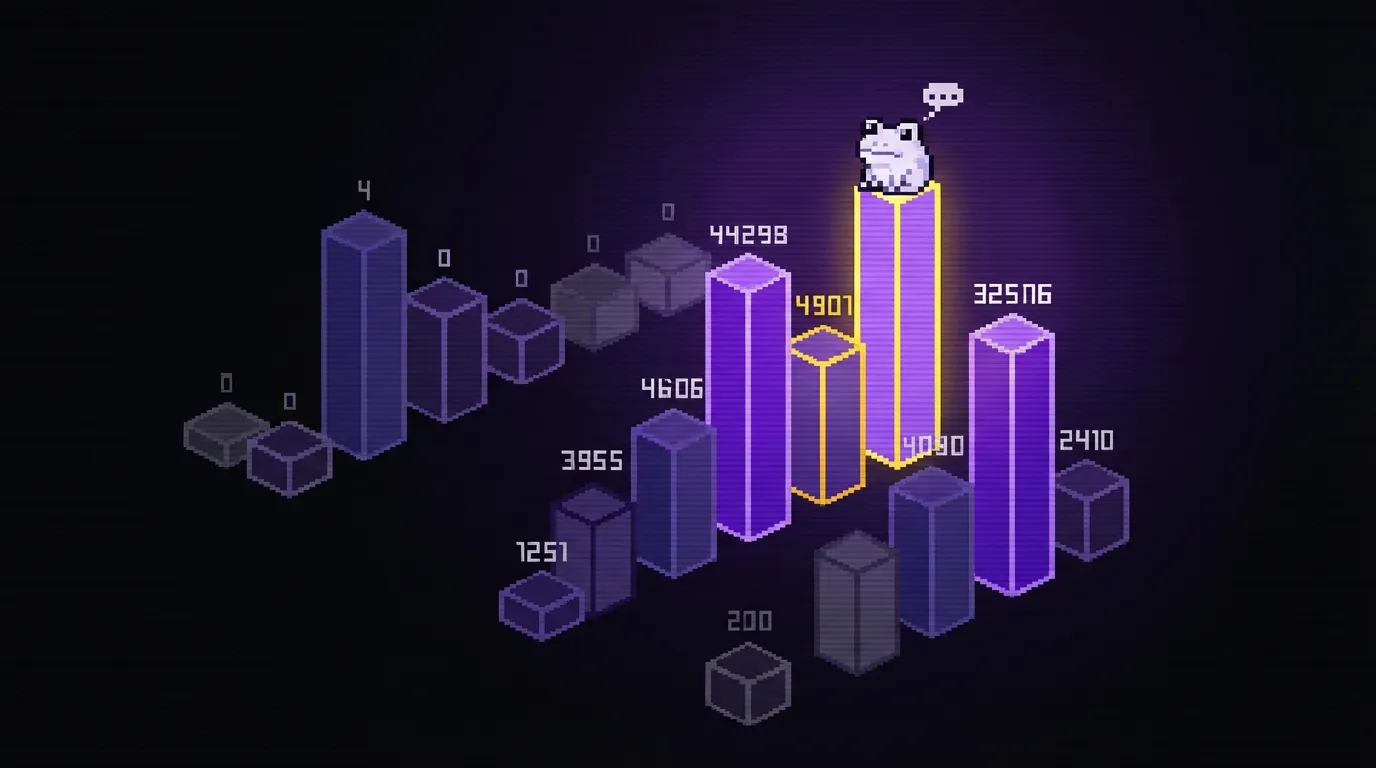
688 tokens. 13 survivors. That's a 1.89% selection rate.
And honestly? This was one of the more interesting weeks in a while. Not because the numbers were big. Because the pattern is shifting.
The Headline Numbers
Drill tracked 688 new Solana tokens that completed their full 24 hours of monitoring between March 23 and March 30. Of those, 655 got hard rejected for failing critical security checks. That's 95.2% of everything the algo saw this week.
13 tokens passed all filters. That's down from last week, and the selection rate slipped from 2.02% to 1.89%.
But here's the thing nobody's talking about: the tokens that DID pass are performing better. Median outcome for selected tokens hit 1.83x this week, up from about 1.48x last week. That's a meaningful jump.
Fewer tokens launching. Fewer passing. But the ones that get through are giving traders more room to work with.
The Contraction Is Real
Token volume dropped 13% week over week. We went from about 790 tokens tracked last week to 688 this week. That lines up with what everyone's seeing across the ecosystem: Solana DEX volume fell 62% over the past three weeks according to multiple data sources, and Pump.fun's daily revenue has been sliding since February.
The memecoin market isn't dead. It's just... quieter. And quieter markets are where the algo tends to shine, because there's less noise drowning out the signal.
For context, the broader memecoin market cap actually climbed about $1.5 billion this week to roughly $31 billion. But that's driven by the big caps ($TRUMP, $BONK, $WIF). At the micro cap level where Drill operates, it's a different story entirely.
Top Performers: Deadwhale Leads the Pack
Here's what the top 5 looked like this week:
1. Deadwhale: 8.12x The week's standout. Launched on Pump.fun, got selected at about $211K market cap (roughly the amount of cash in a small restaurant). Peaked at 8.12x, but it took 847 minutes to get there. That's over 14 hours. If you weren't watching at the right time, you caught a very different multiple. Top 10 wallet concentration at selection was about 20%, which is within healthy range.
2. CHIBILAND: 6.16x I wrote a full Token Autopsy on this one last week. Hit its peak in just 172 minutes (under 3 hours), which made it the fastest performer of the bunch. Notably clean wallet distribution too: top 10 holders only controlled about 4.8% at selection. That's unusually decentralized for a memecoin.
3. ACTP (Act P: The Pixel Prophecy): 3.87x Quick mover. Peaked in 45 minutes at a market cap that started around $157K. Top 10 held about 16%, so reasonably distributed. The kind of token where you either caught it in the first hour or you missed the meat of the move.
4. WhiteHouseApp (The White House App): 3.69x Political meme play, which tracks given the ongoing geopolitical chaos. Small entry: only $40K market cap at selection, which is the lowest of the top 5. Peaked in 41 minutes. Top 10 concentration around 19%.
5. Hirotaka (齊藤洋孝): 2.57x Japanese name, steady climb. Took 271 minutes (about 4.5 hours) to peak at 2.57x. Market cap at selection was about $87K. Slower, steadier, less dramatic.
The pattern here: the best outcomes came from tokens with relatively clean wallet distributions. CHIBILAND at 4.8% top 10 concentration hit 6.16x. WhiteHouseApp at 19% hit 3.69x. Correlation isn't causation, but the data keeps pointing in the same direction. → Related: Why wallet concentration matters
Pump.fun: The Only Game in Town
This is the stat that jumped out at me most.
Of the 688 tokens Drill tracked this week, 595 came from Pump.fun (that's a launchpad where anyone can create a new token in seconds). That's 86.5% of all tracked tokens. Raydium LaunchLab accounted for 80 tokens, Meteora DBC had 12, and there was 1 lone token from Raydium CPMM.
All 13 selected tokens came from Pump.fun. Zero from any other platform.
Raydium LaunchLab launched 80 tokens this week and got zero past Drill's filters. Meteora: 12 tokens, zero selected. Pump.fun's selection rate was 2.18%. Everyone else's was literally 0%.
I've been saying for weeks that Pump.fun is the dominant launchpad, but "dominant" doesn't capture it anymore. It's the only platform producing tokens that pass security and market health checks. Everything else is noise. → Related: Pump.fun's evolution beyond a launchpad
The Bundler Problem
One data point that's hard to ignore this week: among the 13 selected tokens, the average bundler holdings sat at 49.17%.
That's extremely high. For context, anything above 15% bundler concentration is considered dangerous in our framework. Bundlers are wallets that buy tokens in the same transaction block as the deployer, essentially insiders who get in at the ground floor before anyone else can.
So why did these tokens still pass? Because bundler concentration is one signal among many. The algo weighs it alongside security scores, liquidity depth, holder count, and dozens of other factors. A token with high bundler activity but clean security, good liquidity, and organic trading patterns can still clear the filters.
But it tells you something about the current state of the market: even the "good" tokens have significant insider activity. The days of finding pristine, community-driven launches are... well, let's just say the data isn't encouraging.
The Serial Deployer With 956 Tokens
One of the story worthy flags this week: a token called 渝爱 came from a deployer who had previously launched 956 tokens.
Nine hundred and fifty six.
The token only hit 1.39x and got archived without much fanfare. But the fact that someone has deployed nearly a thousand tokens tells you everything about the current meta (the dominant strategy that most players are running). These are factory deployers. They throw tokens at the wall until something sticks, extracting whatever value they can from each attempt.
This is why automated vetting matters. Nobody is manually checking deployer history across 956 previous launches. → Related: How to check if a token creator has scammed before
What This Means for the Week Ahead
Three things I'm watching:
The contraction trend. Volume has dropped for three consecutive weeks. If it keeps falling, expect selection rates to compress further as fewer tokens enter the pipeline. But also expect the survivors to be slightly better quality, like we saw this week.
Pump.fun's monopoly. Zero selections from any other platform is extreme. If Raydium LaunchLab or Meteora can't produce tokens that pass basic security and market health checks, that's a structural problem for those platforms.
The median multiple. 1.83x is the honest number this week. Not 8x (that's the best case). Not 6x (that's the second best). 1.83x is what the typical selected token returned. That's still better than buying randomly, where the survival rate is somewhere around 4%, but it's a reminder that memecoin trading is a game of small edges, not guaranteed winners.
Real talk: the market is cooling, and the data confirms it. Fewer launches, fewer passes, lower volume. But the quality signal is holding. The algo keeps finding tokens worth watching, even in a down market. That's what it was built for.
Sources
- Solana DEX volume decline and network revenue data — Phemex
- Memecoin market cap weekly data — The Market Periodical
- Pump.fun trader loss statistics, March 2026 — CryptoNews
- Drill.meme data, March 23 to 30, 2026