Market Cap, Liquidity, Volume: The 3 Numbers That Actually Matter
The only three numbers you need to read before aping into a Solana memecoin. Plain English, real Drill data, zero jargon traps.

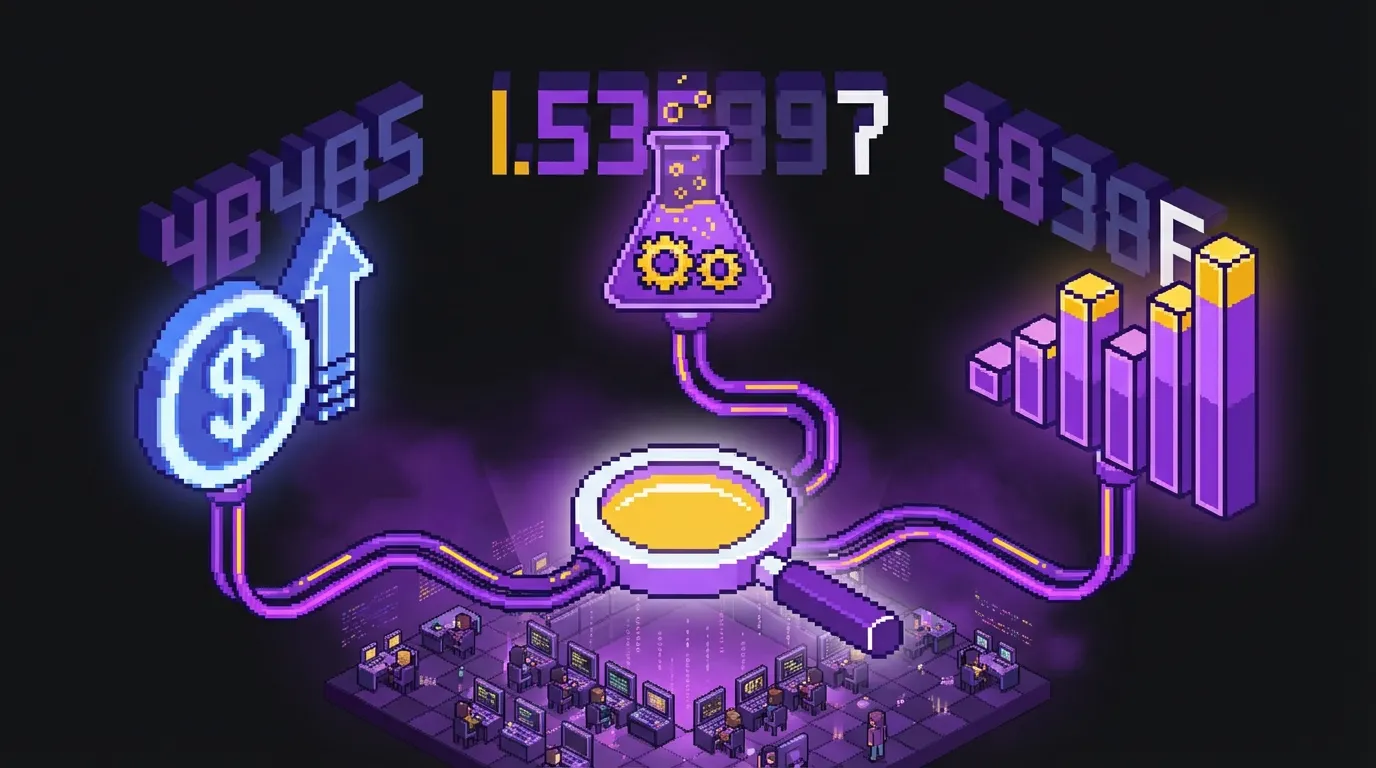
Let me save you some money.
You're staring at a token page. There are about forty numbers on the screen. Most of them are noise. Three of them matter.
Market cap. Liquidity. Volume.
Learn what those three mean and you can walk away from 80% of the traps that cost beginners their bag. Skip this and you're flying blind into a forest full of bear traps.
Market Cap: The Total Price Tag
Market cap is the price of one coin multiplied by how many coins exist. Think of it as the total price tag on the entire project. If someone wanted to buy every single token, that's roughly what they'd spend.
A $50K market cap means the whole token is "worth" about fifty grand. A $5M market cap means five million. Same math, bigger sticker.
Here's the thing nobody tells you. Low market cap is not automatically "cheap." It's just small. A $30K token can die before you blink. A $3M token can still go to zero. Size tells you the stage of the journey, not the destination.
The Oracle's selected tokens over the last 7 days had an average market cap of about $105,000 at selection time (source: Drill.meme Oracle data, Apr 1 to Apr 7, 2026). That's the sweet spot we look for: old enough to have holders, young enough to still move.
Below $30K? Usually pre-bond chaos. Above $1M? Most of the move already happened. Not a rule. A pattern.
Liquidity: The Cash in the Register
Liquidity is the pool of money sitting in the token's trading pair on a decentralized exchange (DEX, which is just a site where people swap tokens without a middleman).
Think of it like the cash in the register at a corner store. If the register has $200 in it and you try to cash out a $500 check, you're not walking out with $500. You're walking out with a discount and a bad attitude.
Same with memecoins. Low liquidity means your sell order moves the price against you. This is called slippage (the price moving while you're standing in line).
Real talk for a second. The Oracle's selected tokens last week averaged about $24,000 in liquidity (source: Drill.meme Oracle data, last 7 days). That's not a lot. A single whale selling $5K can drop a token 15% in one trade.
What to actually check:
- Liquidity under $10K on a $100K+ market cap token. Nope. Run.
- Liquidity "locked" for 7 days. Wow. A whole week. I've had leftovers in my fridge longer than that.
- Liquidity growing alongside price. Good sign. Real buyers are showing up with real money.
The rule of thumb: if the market cap is more than 10x the liquidity, exits are going to hurt. Simple as that.
Volume: The Heartbeat
Volume is the total dollar amount traded in a given window, usually 24 hours. It tells you if anyone is actually paying attention.
High volume = lots of buying and selling = the token is alive. Low volume = nobody cares = you're about to be the only person left holding.
But, and this is where beginners get cooked, volume can be completely fake. Scammers run bots that buy and sell from themselves to make the chart look busy. This is called wash trading (fake volume the creator cooks up to look popular). It inflates the number without adding a single real buyer.
How to tell if volume is real:
- Check the number of unique holders. Growing? Good. Flat while volume is exploding? Wash trade.
- Look at the trade history. Real traders buy random amounts. Bots buy in robotic patterns.
- Compare volume to liquidity. If a token has $15K in liquidity and $800K in 24h volume, someone is cycling the same money back and forth.
The Oracle hard-rejected 516 of 597 tracked tokens last week (source: Drill.meme Oracle data). Fake volume patterns were a recurring flag. If the numbers don't add up, we assume they're lying and move on.
The Three Read Together
One number alone tells you nothing. The relationship between them tells you everything.
Healthy: $150K market cap, $30K liquidity, $400K daily volume, growing holders. Someone's home.
Sketchy: $2M market cap, $8K liquidity, $3M daily volume, flat holders. That's a trap dressed as a party.
Dead: $60K market cap, $5K liquidity, $2K daily volume, zero new wallets. You know what happens next.
Every single time you're about to buy, run the three numbers together in your head. It takes twelve seconds. It will save you more money than any trading course ever sold you.
→ Related: How to Spot a Rugpull in 5 Warning Signs
→ Related: What Happens When a New Memecoin Launches
Key Takeaways
- Market cap is the total price tag. Low isn't cheap. It's just small.
- Liquidity is the cash in the register. If it's thin, your exit is going to bleed.
- Volume is the heartbeat. Check it against holders to filter out fake wash trades.
- Rule of thumb: market cap above 10x liquidity means exits hurt.
- The Oracle's sweet spot for selections last week: ~$105K market cap, ~$24K liquidity. That's where the math starts to make sense.
Look. You're going to see a hundred tokens this week that promise 100x. Most of them will be dead by next Tuesday. The three numbers above will not tell you which one is going to moon. Nothing does. But they will tell you which ones you should not touch with a ten-foot pole, and that alone puts you ahead of 90% of the people reading the same chart. The Oracle checks these automatically on thousands of tokens a day so you don't have to do it by hand. Up to you.
Sources
- Drill.meme Oracle data, April 1 to April 7, 2026 — First-party token tracking data (597 tokens tracked, 36 selected, avg selection market cap $104,981, avg liquidity $24,478)
- Top Solana Meme Coins by Market Cap — CoinGecko
- Solana Memecoin Hold Time Drops to 58 Seconds in 2026 — Phemex News