The Life and Death of a Memecoin in 24 Hours
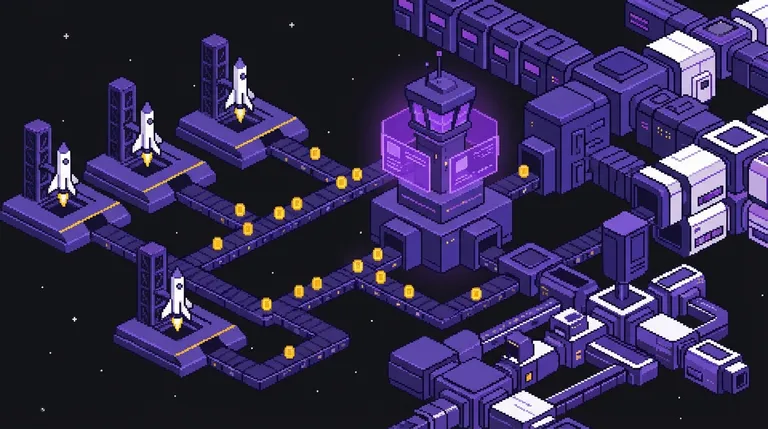
Over 10,000 memecoins launch on Solana every day. Here is exactly what happens from the moment someone clicks Create to the moment a token dies.

The Life and Death of a Memecoin in 24 Hours
Right now, while you're reading this sentence, someone just launched a memecoin on Solana.
By the time you finish this paragraph, two more will exist. About seven tokens get created every single minute on Pump.fun, the biggest memecoin launchpad on Solana. That's over 10,000 new tokens a day. And roughly 95% of them will be worthless before tomorrow.
I've watched this cycle thousands of times. The birth, the hype, the pump, the dump, the silence. It plays out the same way with eerie consistency. If you're going to trade memecoins, or even just understand what your friends are losing money on, you need to know exactly how this machine works.
Here's the full lifecycle. Every stage. No sugarcoating.
How Does a Memecoin Get Created? (Stage 1: Cost About $2)
Creating a memecoin on Pump.fun takes about 30 seconds. You connect a Solana wallet, type in a name and ticker symbol, upload an image, and pay roughly $2 in SOL. That's it.
No coding required. No team. No whitepaper. No audit. Nothing.
The platform creates a fixed supply of 1 billion tokens. Around 800 million of those get placed on something called a bonding curve (I'll explain that in a second). The rest get handled by the protocol. There's no presale, no team allocation, no insider tokens. At least not officially.
This is where it starts. A token with a name, a picture, and zero reason to exist. Just like the other 10,000 that launched today.
What Is a Bonding Curve and How Does It Work? (Stage 2)
Here's where people get confused, so let me make this simple.
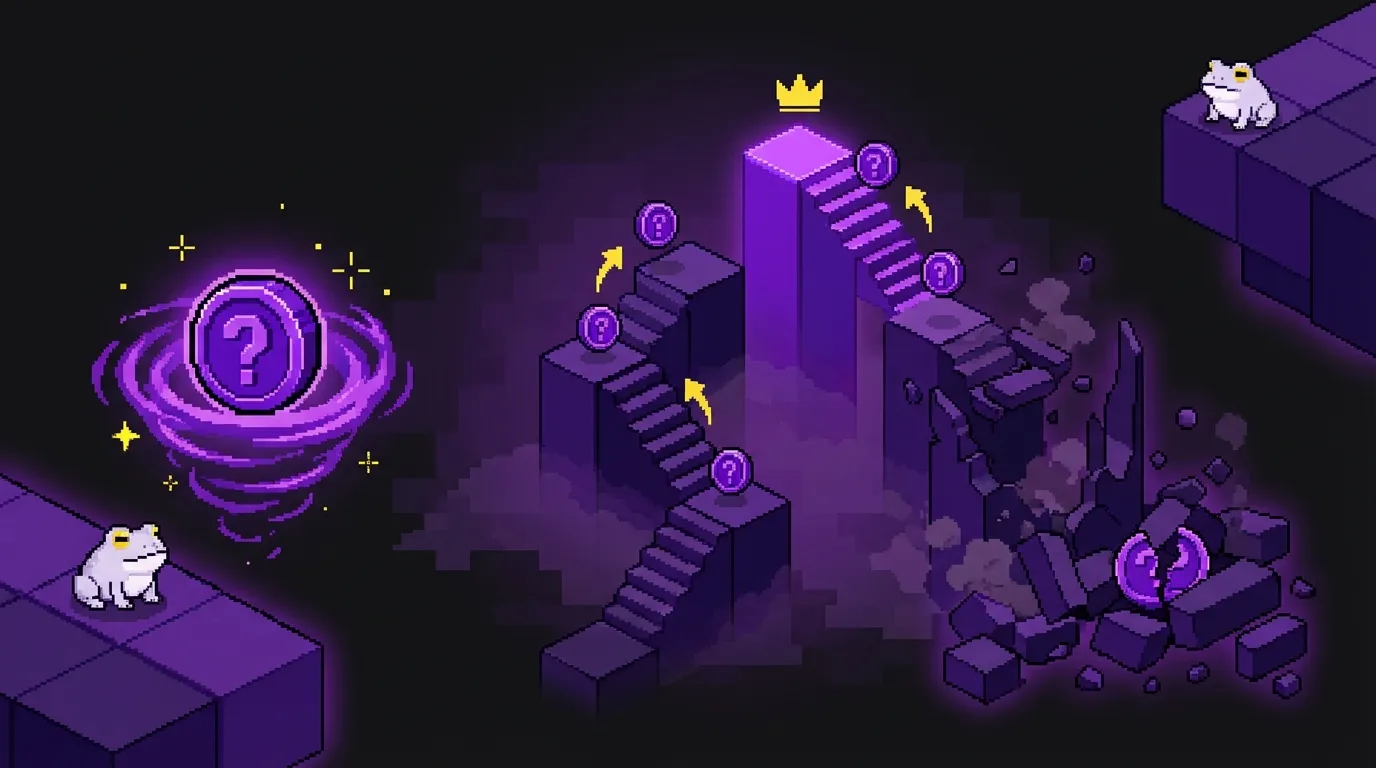
A bonding curve is a pricing formula baked into the smart contract. It works like this: the more people buy, the higher the price goes. Automatically. No sellers needed to set the price. No order book. Just math.
Think of it like a store where every item on the shelf gets more expensive each time someone buys one. The first person pays almost nothing. The tenth person pays a bit more. The hundredth person pays significantly more. The price curve is steep and non-linear, meaning early buyers get a massive advantage.
This is the "cheap" phase. Tokens on the bonding curve have tiny market caps, sometimes under $1,000. The entire existence of the token at this point depends on whether enough people buy in to push it to the next stage.
Most don't make it. Only about 1% of tokens created on Pump.fun ever complete their bonding curve. The other 99% just... sit there. Nobody buys. The creator moves on. The token becomes a ghost.
What Happens When a Token Graduates? (Stage 3)
If enough buyers push the market cap to around $69,000 to $100,000 (the exact threshold depends on the price of SOL), something important happens. The token graduates.
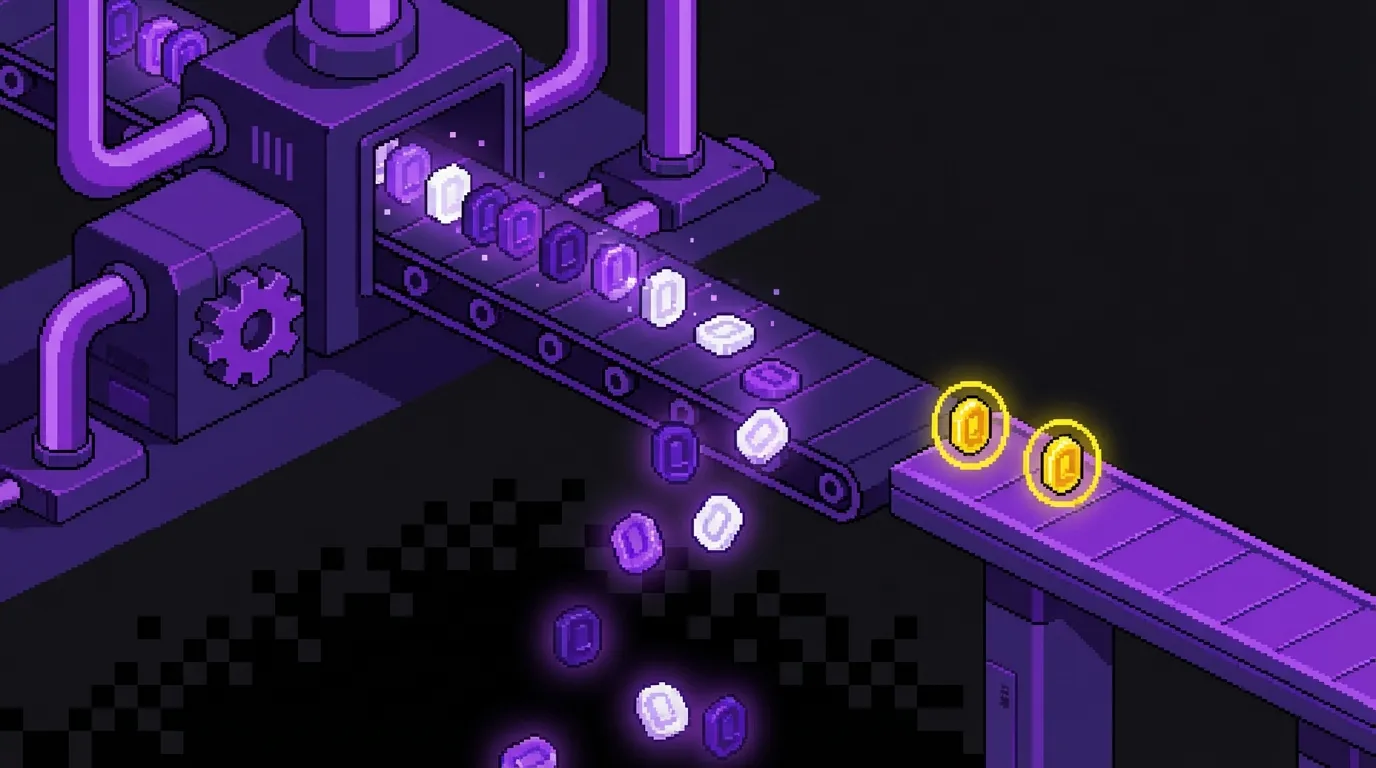
Graduation means the bonding curve is fully sold out. All 800 million tradeable tokens have been bought. The token is now "real" enough to trade on an actual decentralized exchange (DEX).
On Pump.fun, graduated tokens automatically migrate to PumpSwap, Pump.fun's own DEX that launched in 2025. Before PumpSwap existed, tokens migrated to Raydium, another Solana DEX. The migration used to cost 6 SOL (roughly $950 at the time). Now it's free.
Here's what happens during graduation: Pump.fun takes the liquidity locked in the bonding curve, about $12,000 worth, and uses it to create a liquidity pool (a pot of money that lets people buy and sell the token freely). The remaining unsold tokens get burned, meaning they're destroyed permanently.
The token now trades like any other cryptocurrency. Price goes up when people buy. Price goes down when people sell. No more bonding curve safety net. Welcome to the open market.
Trading fees also drop. On the bonding curve, Pump.fun charges 1%. On PumpSwap, it's 0.25%. Cheaper to trade, but also wilder.
What Happens on the Open Market After Graduation? (Stage 4)
This is the part nobody warns you about.
A token just graduated. The Telegram group is buzzing. Someone posts a screenshot of their 10x gain. You see it on your timeline. Your brain says "I should buy this before it goes higher."
I've been that person. Ask me how it went. (Don't actually ask.)
Here's what's really happening behind the scenes. The people who bought during the bonding curve, when the token cost almost nothing, are now sitting on massive unrealized profits. Many of them are bots that bought within seconds of the token's creation. The moment the token hits a DEX with real liquidity, those early buyers start selling.
This is the moment you become what's called exit liquidity (the person who buys so that someone else can sell at a profit). You're the last one into the trade. They're the first ones out.
The numbers are brutal. According to Solidus Labs, about 98.6% of tokens launched on Pump.fun end up as rug pulls (the creator drains the money and vanishes) or pump-and-dump schemes (insiders hype the price, then sell everything at once). The average lifespan of a Pump.fun token is 12 days. Most that graduate lose all trading activity within 48 hours.
That doesn't mean every single token is a scam. Some are genuine community projects that simply fail because nobody sticks around. But the outcome looks the same either way: the chart goes up, then it goes down, then it flatlines.
Stage 5: The Graveyard
Open any blockchain explorer and look at graduated tokens from a month ago. Pick ten at random.
Eight of them will show zero trades in the last 24 hours. One might have a few hundred dollars in daily volume, mostly bots trading back and forth. Maybe one, if you're lucky, still has an active community and real trading activity.
This is where tokens go to die. Not with a dramatic rugpull or an exit scam. Just... silence. No buyers. No sellers. No one cares. The Telegram group goes quiet. The Twitter account stops posting. The "community" was really just fifty people hoping to flip a quick profit, and they've already moved on to the next launch.
Every single day, roughly 9,900 tokens go through this cycle and end up here.
Why Do People Still Trade Memecoins Despite the Odds?
Because the 1% that survive can be spectacular.
BONK went from nothing to a $4 billion market cap at its peak. PEPE turned early buyers into millionaires. WIF, a token with a picture of a dog wearing a hat, crossed $4 billion too. These stories are real. They happened. And they make people believe it'll happen to them.
The math doesn't lie though. For every BONK, there are thousands of dead tokens. The people who made money on those winners weren't just lucky. They were early, they did research, and most importantly, they knew when to sell. (I wrote a whole piece on → Related: When to Sell Your Memecoin if you need help with that part.)
Key Takeaways
- Over 10,000 memecoins launch on Solana daily, and roughly 99% never complete their bonding curve.
- Only about 1% of tokens "graduate" from Pump.fun to PumpSwap, and most of those die within 48 hours anyway.
- Early buyers and bots have a massive structural advantage. If you're seeing a token on your timeline, you're probably already late.
- The memecoin lifecycle from creation to death can take as little as a few hours. Understand each stage before you put money in.
- Check who's already holding before you buy. Tools like Drill.meme's Oracle automatically vet token security and wallet distribution so you don't have to do it manually.
Real Talk
Look. I'm not going to tell you never to trade memecoins. I still do. But I do it knowing that the entire system is designed to transfer money from people who arrive late to people who arrive early. That's not a conspiracy. That's literally how bonding curves work.
The people who survive in this game aren't the ones who ape into (buy impulsively without research) every new token at 2 AM. They're the ones who understand the machine. Who know that when they see a "newly graduated" token trending on Twitter, hundreds of early wallets are already planning their exit.
Now you know how the machine works. What you do with that is up to you.
Sources
- Every 24 Hours on Pump.fun, 10,417 Tokens Are Launched while 9,912 Become Defunct — ChainPlay
- 98% of Tokens on Pump.fun Have Been Rug Pulls or an Act of Fraud, New Report Says — CoinDesk / Solidus Labs
- Understanding Bonding Curves: The Economics Behind Pump.fun and Meme Coin Launches — Flashift
- Total Tokens Created on Pump.fun Hits Record 3 Million — Solana Floor
- The Life Cycle of Meme Coins: From Rise to Fall, Explained — Bitget
- Pump.fun Debuts PumpSwap DEX with 0.25% Fee Structure and Zero SOL Migration Fee — KuCoin
- Pump.fun Token Graduations Rise to Six-Month High — Cryptopolitan