Telegram Trading Bots: Fast, Convenient, and They Have Your Private Keys
Telegram trading bots let you buy Solana memecoins in seconds. Here's how they work, what they cost, and the security tradeoff nobody talks about.


Telegram Trading Bots: Fast, Convenient, and They Have Your Private Keys
You're in a group chat. Someone drops a contract address. By the time you copy it, open your browser, navigate to a DEX (decentralized exchange), connect your wallet, set your slippage, and confirm the swap, the token is already up 300%.
That's why Telegram trading bots exist.
They let you buy a token by pasting an address into a chat. That's it. No browser. No wallet pop-ups. No fumbling with settings while the chart screams past you. And over $23 billion has flowed through just one of them.
But here's the thing nobody tells you when you're setting one up at 2 AM: you're handing your private keys to a server you can't see, run by a team you probably can't name.
Let me walk you through how these bots actually work, who the big players are, and the tradeoff you're making every time you hit "buy."
What a Telegram Trading Bot Actually Does
Think of it like a remote control for your crypto wallet, but the remote control lives inside Telegram.
When you start a bot, it creates a new wallet for you (or you import an existing one). You send SOL to that wallet. Then whenever you paste a token's contract address into the chat, the bot executes a swap on a decentralized exchange on your behalf. No website. No browser extension. Just a Telegram message and a confirmation button.
The bot handles the hard stuff in the background: finding the best price across exchanges, setting the right slippage (the price moving while you're standing in line), and getting your transaction through as fast as possible.
Some bots go further. They can snipe (buy automatically the moment a new token launches), set limit orders, copy other wallets' trades, and track your profit and loss in real time. They've basically turned a messaging app into a full trading terminal.
Why Speed Matters This Much
In memecoin trading, being 30 seconds late can mean the difference between a 10x and buying someone else's bags.
When a new token launches on Solana, the first buyers get in at the lowest price. Every second after that, the bonding curve (a price that goes up automatically as more people buy) pushes the cost higher. By the time a token shows up on your Twitter feed, the early window is usually closed.
Telegram bots cut the process from maybe 45 seconds on a browser DEX to under 5 seconds. For sniping new launches specifically, some bots monitor the blockchain directly and submit buy transactions within milliseconds of a new liquidity pool appearing.
That speed is real. It's measurable. And it's the reason roughly 52,000 people use these bots every single day.

The Big Names You'll Hear About
The Telegram bot space on Solana has consolidated around a few major players. Here's who's moving the most volume:
Trojan is the biggest. Over $23 billion in lifetime trading volume and around 1.7 million users. It works as a full trading terminal inside Telegram with charting, limit orders, copy trading, and automatic sniping. Fees are 0.9% per trade with a referral link, 1% without.
BONKbot is the second largest with about $14 billion in lifetime volume and over 526,000 users. It's stripped down and fast, which makes it a popular choice for people who just want to buy and sell quickly without extra features. Same 1% fee on every swap.
Maestro comes in third at roughly $12.8 billion in lifetime volume. It supports multiple blockchains, not just Solana.
Banana Gun is another major bot that crossed $8 billion in annualized volume in 2026, with 1.3 million users.
All of them charge somewhere between 0.5% and 1% per trade. That adds up. If you're trading $1,000 worth of tokens, you're paying $5 to $10 in bot fees on top of Solana's network fees and any DEX fees. On a round trip (buy and sell), you're looking at 1% to 2% gone before you even check whether the trade was profitable.
The Part Nobody Wants to Talk About
Here's where I need to be straight with you.
When you use a Telegram trading bot, you are giving that bot access to your private keys. Your private key is basically the master password to your wallet. Whoever has it can move your funds whenever they want.
Most bots either generate a new wallet for you (and store the key on their servers) or ask you to import your existing wallet's key. Either way, your keys live on someone else's infrastructure.
This isn't theoretical risk. It's happened.
In January 2026, a Telegram trading bot called Polycule got hacked. Attackers compromised the server, grabbed the private keys, and drained $230,000 from user wallets. The team took the bot offline, patched it, and promised refunds. But for the people who had funds in those wallets, the damage was already done.
Before that, Unibot (an Ethereum-based trading bot) got exploited for $600,000 through a smart contract vulnerability. The token crashed over 30% in the aftermath.
These aren't small, unknown projects. These are bots that millions of people use.
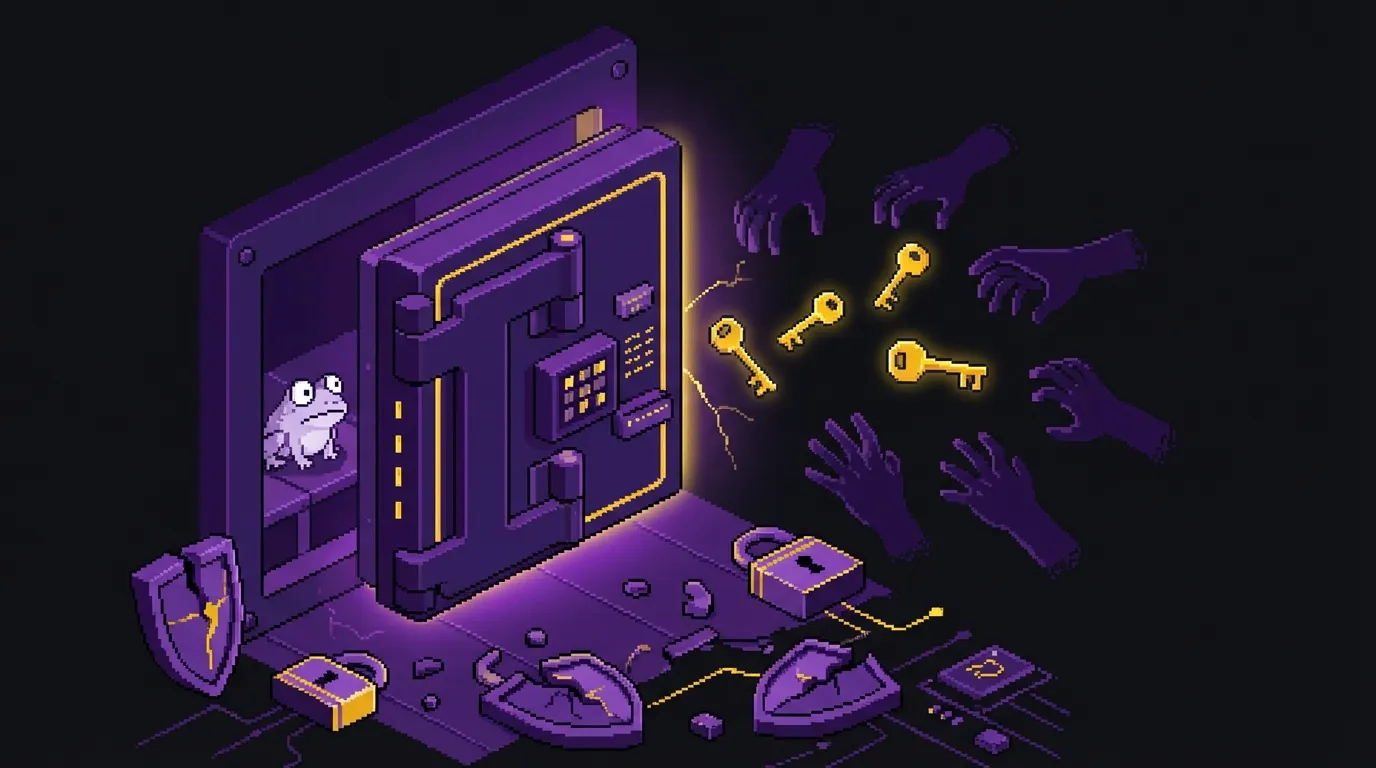
The core problem is architectural. Most of these bots are closed-source. You can't audit the code. You can't verify how they store your keys. You can't confirm they're encrypted properly. You're trusting an anonymous team's server security with real money. And if your Telegram account itself gets compromised (through SIM swapping or a stolen session), an attacker can control your bot wallet without ever needing your seed phrase.
So Should You Use One?
Look. I use them. Lots of experienced traders use them. The speed advantage is real and sometimes it's the difference between catching a play and missing it entirely.
But I treat my bot wallet the way I treat cash in my pocket: I only keep in there what I'm actively trading with. The moment I'm done for the day, profits go back to my main wallet. A hardware wallet. One that no Telegram bot has ever touched.
Here's how to use one without losing sleep:
1. Never import your main wallet. Create a fresh wallet through the bot. If that wallet gets compromised, you lose what's in it, not your entire portfolio.
2. Keep balances small. Only deposit what you plan to trade in the next session. Think of it as a hot wallet (one that's always connected and therefore always at risk).
3. Enable two-factor authentication on Telegram itself. Your bot wallet is only as secure as your Telegram account.
4. Withdraw profits regularly. Don't let gains sit in a bot wallet overnight. Move them to a wallet you control completely.
5. Watch the fees. A 1% fee on every buy and every sell means you need your trade to move 2% just to break even. On small trades, that's fine. On bigger positions, it eats into your edge.
Key Takeaways
- Telegram trading bots let you swap tokens in seconds by pasting a contract address into a chat, cutting trade execution from 45 seconds to under 5.
- The biggest bots (Trojan, BONKbot, Maestro) have processed tens of billions in volume, charging 0.5% to 1% per trade.
- Every bot requires access to your private keys, which means you're trusting someone else's server security with your funds.
- Multiple bots have been hacked, including a $230,000 exploit in January 2026, so only keep actively traded funds in your bot wallet.
- The speed advantage is real, but it's a tool, not a strategy. Fast execution doesn't help if you're fast-buying a scam.
Real talk for a second. Telegram bots solve a real problem. Manual trading on Solana is slow and clunky when every second counts. But convenience always comes with a cost, and in this case the cost is custody risk. The traders who survive long-term are the ones who understand that tradeoff and manage it instead of ignoring it.
Tools like Drill.meme's Oracle can help with the other side of the equation: knowing which tokens are worth buying in the first place. Speed gets you in early. Intel gets you in smart. You need both.
Sources
- Best Solana Telegram Trading Bots 2026: Which One Is Fastest? — Backpack Exchange
- Top 5 Solana Trading Bots (2026) — Solana Trading Bots
- Top 5 Solana Telegram Trading Bots — CoinGecko
- Telegram Trading Bot Polycule on Polymarket Hacked, $230K Stolen — KuCoin
- Telegram Crypto Trading Bots: Convenience vs. Security Risks — Hacken
- $16 Billion Through a Telegram Chat: Inside the Trading Bot Retail Crypto Can't Quit — NerdBot
- Hacker Ransacks $600,000 From Popular Telegram Trading Bot, Unibot — The Defiant
- Telegram crypto trading bots spark fears over security vulnerabilities — The Block