Pump.fun Spent $330 Million Buying Its Own Token. The Price Still Dropped.
Pump.fun has bought back $330M of PUMP tokens, cutting supply by 30%. So why is the price still falling? Here's what buybacks actually mean for memecoin traders.

Pump.fun Spent $330 Million Buying Its Own Token. The Price Still Dropped.
You'd think spending $330 million buying your own token would move the price up. You would be wrong.
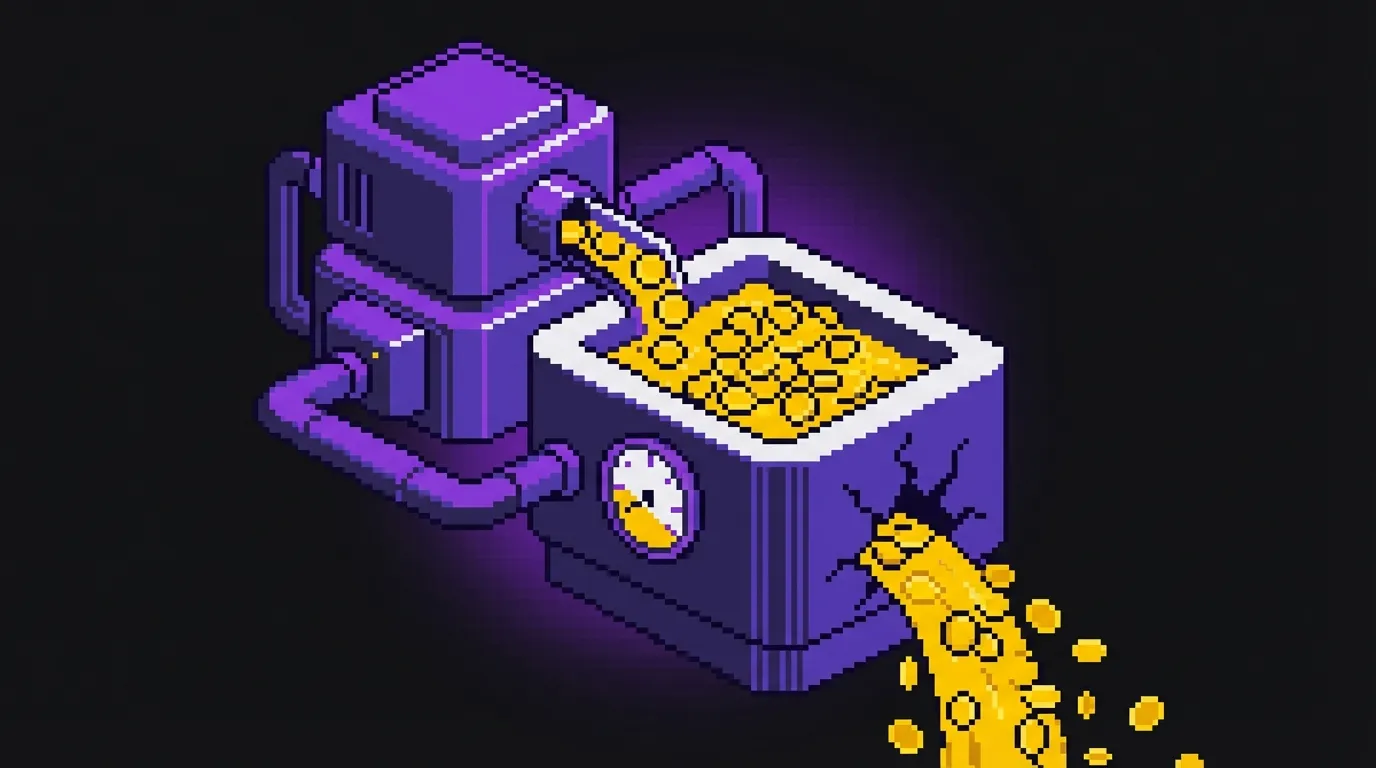
Pump.fun, the memecoin launchpad that basically IS the Solana memecoin economy at this point, just crossed a wild milestone. They've now spent over $330 million buying back their own PUMP token since the program started last July. They've pulled 30% of the circulating supply off the market. Gone. Retired. Not coming back.
And the price? Down almost 10% this week. Down over 35% since launch, according to Yellow.com.
I've seen this movie before. Let me explain what's actually happening, because it matters if you're holding PUMP or thinking about buying the dip.
What Pump.fun Is Actually Doing
Here's the setup. Pump.fun makes money every time someone launches or trades a memecoin on their platform. A lot of money. They crossed $1 billion in total revenue earlier this month, making them the first Solana app to hit that number.
And they're taking almost all of it, 98% of their net fees, and using it to buy PUMP tokens off the open market. Every single day. On March 17 alone, they dropped $8.5 million on buybacks. The daily average runs over $1 million.
A buyback (when a company uses its profits to buy its own token and remove it from circulation) is supposed to work like this: fewer tokens available means each remaining token is worth more. Basic supply and demand. It's the crypto version of a stock buyback, which companies like Apple and Google do all the time.
So why isn't it working?
The Problem Nobody Wants to Talk About
Look. Buybacks only work if they're the biggest force acting on the price. And right now, they're not.
Three things are fighting against those $330 million in purchases.
First, the whole market is bleeding. Solana itself is down 37% this year. When the tide goes out, buybacks are like bailing water out of a sinking boat. It helps. It's not enough.
Second, whales are selling. Back in February, Pump.fun wallets dumped $10 million in tokens even as the buyback program was running full speed. When insiders sell faster than the protocol can buy, guess who wins? (Hint: not you.)
Third, and this is the big one, there's a wall of tokens coming.
On July 12, 2026, 82.5 billion PUMP tokens unlock. That's 41% of the total supply. These belong to founders and early investors who got in at basically zero cost.
Let me put that in perspective. Pump.fun has spent nine months and $330 million removing 30% of the supply. In one day this July, 41% more supply hits the market. From people who paid almost nothing for it.
I've seen this exact setup play out with other tokens. The buyback creates a floor. The unlock breaks through it. Every. Single. Time.
Why Buybacks Fool People
Here's the thing nobody tells you about token buybacks. They sound amazing in a headline. "$330 million bought back!" "30% of supply retired!" These are real numbers. They're impressive. And they make you feel like the price HAS to go up eventually.
But buybacks are backwards-looking. They tell you what already happened. The unlock on July 12 is forward-looking. And the market prices in the future, not the past.
Think of it like this. Imagine a store that's running a huge "we're buying back all our gift cards!" campaign. Sounds bullish for gift card holders, right? Now imagine you find out the store already printed twice as many new gift cards and is about to hand them out for free. The buyback doesn't matter anymore.
That's PUMP right now. The math doesn't math.
What Pump.fun Is Doing Right (Credit Where It's Due)
I'm not saying Pump.fun is a scam. Far from it. They're actually one of the few platforms putting their money where their mouth is.
They crossed $1 billion in total revenue. They're the top DEX on Solana by daily volume. They've launched deployer rewards and dividend-style token mechanics. And those multi-chain expansion hints (subdomains for Ethereum, Base, BSC, and Monad) suggest they're thinking bigger than just Solana.
The platform itself is printing money. The question is whether the PUMP token captures any of that value, or if it's just exit liquidity for insiders waiting for July.
That's two very different investments. The business versus the token. I've watched traders confuse the two and lose money on both. (Ask me how I know.)
What You Should Actually Do
Real talk. If you're holding PUMP or thinking about buying:
- Don't buy the "buyback" narrative without checking the unlock schedule. Go to tokenomist.ai and look at the vesting timeline yourself. It takes two minutes.
- Watch the wallet activity, not the press releases. Tools like Drill.meme's Oracle track large wallet movements in real time. When insiders start moving tokens to exchanges before an unlock, that's your signal.
- Understand that "deflationary" doesn't mean "price goes up." A token can burn supply every day and still lose value if new supply or sell pressure overwhelms it. Deflation is one input. It's not the whole equation.
- If you're going to trade the July unlock, plan your entry and exit NOW. Not the day before. Not the day of. Now. The smartest traders are already positioning.
Key Takeaways
- Pump.fun has bought back $330M of PUMP tokens, removing 30% of circulating supply, yet the price keeps falling.
- On July 12, 82.5 billion PUMP tokens (41% of total supply) unlock for founders and early investors who got in at near-zero cost.
- Token buybacks are backwards-looking, token unlocks are forward-looking, and the market prices the future.
- Never confuse a strong business (Pump.fun the platform) with a strong token (PUMP the asset). They're different bets.
- Check unlock schedules before buying any token running a buyback program.
The Honest Part
Most people see "$330 million buyback" and think "free money." I get it. The narrative is seductive. A platform spending hundreds of millions buying its own token feels like the ultimate vote of confidence.
But if the people who built the thing are about to get 41% of the supply for free, ask yourself: who's the buyback really for?
I'm not telling you to sell. I'm not telling you to buy. I'm telling you to do the one thing most traders won't bother doing: look at the unlock schedule, look at the wallet flows, and decide based on math instead of vibes. Automated tools like Drill.meme's Oracle exist precisely for moments like this, when the headline says one thing and the on-chain data says another.
The traders who survive are the ones who read the fine print. Be that person.
Sources
- Pump.fun Hits $1 Billion Revenue. Can PUMP Rebound? -BeInCrypto
- Pump.fun Token Falls 35% Despite $32.7 Million Buyback Initiative -Yellow.com
- PUMP Executes $300 Million Buyback Program to Reduce Circulating Supply by 25.383% -Ainvest
- Pump.fun 2026 Outlook: Revenue, Lawsuit Risks, Token Unlocks, and the 98.6% Rug-Pull Problem -MEXC News
- Pump.fun becomes Solana's first $1B revenue platform as Ethereum, Base, BSC and Monad subdomains hint at cross-chain move -The Block
- Pump.fun Surpasses $300M PUMP Buybacks -KuCoin
- Pump.fun (PUMP) - 82.5B Token Unlock - 12 Jul 2026 -TradingView
- Pump.fun Wallets Dump $10M in Tokens as Buybacks Fail to Stop Price Drop -The Coin Republic