Bonk.fun Just Got Hacked. Here Is How the Wallet Drainer Worked
Bonk.fun's domain was hijacked on March 11 and a wallet drainer stole user funds. Here is exactly how the attack worked and how to protect yourself.

Bonk.fun Just Got Hacked. Here Is How the Wallet Drainer Worked
You know that moment when you visit a website you've used a hundred times, a little pop-up asks you to accept terms of service, and you click "agree" without thinking?
Yeah. That's exactly what the hackers were counting on.
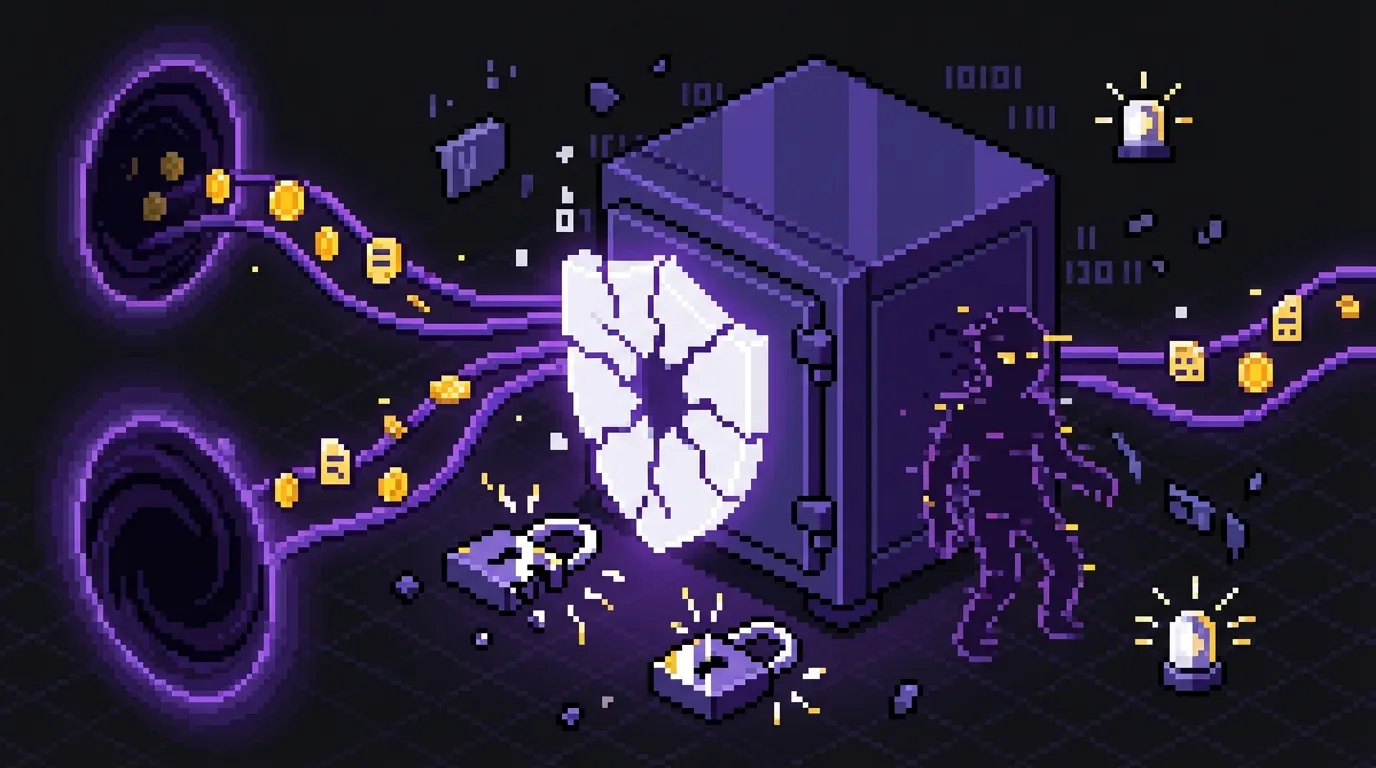
On March 11, someone took over the Bonk.fun domain, the Solana memecoin launchpad backed by Raydium and the BONK community (formerly known as LetsBONK). They didn't touch the smart contracts. They didn't exploit the blockchain. They just changed what the website showed you. And that was enough to drain wallets.
What Actually Happened
Here's the timeline, as simple as I can make it.
A team account at Bonk.fun got compromised. We don't know yet whether it was phishing, a weak password, or something else. But the attacker got in, and once they had access, they swapped out the real website front end with a fake one.
The fake site looked identical to the real Bonk.fun. Same design. Same layout. Same everything.
Except for one thing: a fake terms-of-service pop-up.
If you connected your wallet and signed that pop-up, you weren't agreeing to terms. You were signing a transaction that gave the attacker permission to move everything out of your wallet.
Within seconds. Gone.
The Bonk.fun team, led by an operator known as Tom, caught it relatively fast and started screaming warnings across social media. According to CoinDesk and The Block, they said only users who signed the fake prompt during the active window were affected. If you'd connected to Bonk.fun before the hack but didn't visit during the hijack, you were fine. If you traded BONK tokens through other platforms or trading terminals, also fine.
One user reportedly lost around $273,000. Others reported losses of 10 to 50 SOL (roughly $870 to $4,350 at current prices). The team called losses "minimal" thanks to quick detection, though that probably doesn't feel minimal if it was your wallet.
This Isn't a Smart Contract Bug. It's Worse.
Here's the thing nobody tells you about crypto security.
Most people worry about the blockchain getting hacked. The smart contracts breaking. Some code exploit that drains a liquidity pool.
That stuff happens, sure. But the Bonk.fun attack was a front-end hijack (when someone takes over the website you see, not the code running on the blockchain). The blockchain was fine. The contracts were fine. The only thing that changed was the website sitting between you and the blockchain.
Think of it like this. Your bank's vault is locked. The security system is solid. But someone replaced the bank teller with a thief wearing the same uniform. You hand over your cash because everything looks normal.
That's what a front-end hijack does.
And this pattern is becoming the new normal. According to Chainalysis, crypto scam losses hit an estimated $17 billion in 2025, driven largely by AI-powered impersonation tactics. Attackers have figured out that hacking a website is often easier than hacking a blockchain. Why break into the vault when you can just stand behind the counter?
I've seen this movie before. Balancer got hit with a DNS hijack back in 2023 that worked almost the same way. Fake front end, real losses. The playbook hasn't changed because it keeps working.
How to Tell If You're Looking at a Drainer
Real talk for a second. Most of you cannot tell the difference between a legitimate wallet prompt and a malicious one. That's not an insult. It's a design problem. Wallet interfaces are confusing even for experienced traders.
But here are a few things that should make you pause:
Unexpected pop-ups asking you to sign something. If you visit a site you've used before and suddenly it's asking you to "re-accept terms" or "verify your wallet," that's suspicious. Legitimate platforms don't randomly re-prompt you.
The URL looks right, but something feels off. In the Bonk.fun case, the URL was the actual domain. The attacker controlled it. So URL checking alone wouldn't have saved you. But if you see a site asking for wallet permissions you didn't expect, slow down.
Your wallet is asking you to approve a transaction you didn't initiate. If you clicked "accept terms" but your wallet shows a transaction approval (not just a signature), that's a drainer. Close everything. Immediately.
What You Should Actually Do Right Now
If you interacted with Bonk.fun on March 11, here's your checklist:
- Check your wallet. Open it. Look at your balances. Look at recent transactions. If something moved that you didn't move, you were hit.
- Revoke your approvals. Go to Revoke.cash, connect your wallet, and look at every approval you've granted. If you see anything connected to Bonk.fun from March 11, revoke it immediately. Actually, revoke anything you don't recognize while you're there. Think of approvals like house keys you've handed out. If you can't remember giving one to someone, take it back.
- Move your remaining assets. If you signed that fake prompt, the attacker may still have permissions you haven't found. The safest move is to transfer everything to a fresh wallet. Yes, it's annoying. Yes, it's worth it.
- Use a burner wallet for new platforms. This is the single best habit in memecoin trading. Keep a separate wallet with small amounts for interacting with launchpads and new sites. Your main holdings should live in a wallet that never touches random websites. I learned this the hard way (don't ask me how much I lost).
- Bookmark the real sites. Stop Googling "Bonk.fun" or "Pump.fun" and clicking the first result. Bookmark the verified URLs. Use those bookmarks every time. Google ads have been used to serve fake crypto sites before, and they'll be used again.
The Bigger Pattern Here
The Bonk.fun hack is one incident, but it points to something memecoin traders need to understand. The biggest risk in crypto isn't the blockchain. It's the stuff around the blockchain. The websites. The apps. The browser extensions. The Discord links. The Telegram bots.
Your on-chain assets are only as safe as the weakest interface you use to interact with them.
Tools like Drill.meme's Oracle vet token security automatically before you even see them, but no scanner can protect you from signing a malicious transaction on a hijacked website. That part is on you.
The good news: the Bonk.fun team caught this quickly. The BONK token itself barely moved, dipping about 1% before recovering, because the market understood this was a website problem, not a token problem.
The bad news: this will happen again. To some other platform. Maybe one you use.
Key Takeaways
- Bonk.fun's domain was hijacked on March 11 through a compromised team account, and a fake terms-of-service prompt drained wallets of users who signed it.
- Front-end hijacks are increasingly common because hacking a website is easier than hacking a blockchain, and the results are just as devastating for victims.
- If you interacted with Bonk.fun during the hack window, revoke your approvals at Revoke.cash and consider moving assets to a fresh wallet.
- Use a burner wallet for launchpads and new platforms so your main holdings are never exposed.
- Bookmark verified URLs instead of Googling them, because even search results can be weaponized.
Look. Most people reading this are going to keep clicking "accept" on every pop-up without reading it. I know because I used to do the same thing. But the ones who pause, who check their wallet prompt before signing, who keep a burner wallet for sketchy sites, those are the ones who still have money in their wallets six months from now. Be that person.
Sources
- Bonk.fun hacked: Domain hijacked, crypto drainer planted - CoinDesk
- Bonk.fun's official website hijacked, draining user funds upon interaction - The Block
- Bonk Fun Website Hijacked: Live Exploit Is Draining User Funds - CryptoNews
- Hackers Hijack Bonk.fun Domain, Deploy Wallet-Draining Phishing Prompt - Decrypt
- BONK.fun team account hacked and used to launch wallet drainer on site - CryptoBriefing
- Bonk.fun users at risk after hackers hijack domain to deploy wallet drainer - Invezz
- Token Approvals and Wallet Drainers: How to Keep Your Assets Safe - Trust Wallet